

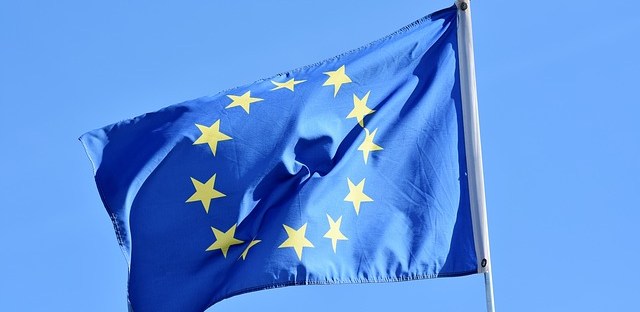
This post will explain what the European Court of Human Rights (ECtHR) is and how you should reference its judgments, decisions and reports using the OSCOLA referencing system. It will also discuss the Council of Europe, how this operates and what its powers are, as well as the European Convention on Human Rights (ECHR).
The first important thing to note is the difference between the Council of Europe, where the ECtHR originates from, and the European Union (EU), as it is easy to confuse the two. They are in fact two completely different bodies that share some Member States. Therefore, even though the UK will be leaving the EU, it will not be leaving the Council of Europe, the ECHR will still have full effect and the ECtHR will have jurisdiction over the UK.
What is the EU?
The EU was originally set up with the aim to make trade, work and business between the participating Member States easier. There are currently 28 Member States, including the UK, which is still a Member State at present. When the EU was first set up, there were no particular rights for individuals, it was concerned purely with business matters.
However, over the years, the EU has evolved to include more human rights and citizenship rights, first appearing as “general principles”. These are found in the EU treaties, the EU’s Charter of Fundamental Rights and in principles of EU law, so the Member States do have to abide by these human rights fundamentals. If you would like to know about referencing EU material, how to reference legislation can be found here and how to reference cases here.
What is the Council of Europe?
The Council of Europe operates completely separately from the EU and has 47 Member States, so it has a much wider range than the EU. The ECHR comes from the Council of Europe and cases are heard in the ECtHR. The Council of Europe unites governments from its Member States to establish legal minimum standards, then reviews the application of these standards in the Member States and offers assistance if needed.
The ECHR also created the European Commission on Human Rights in 1954. This heard complaints before they could go the ECtHR, to check that they were suitable. If the case was deemed inadmissible, the Commission would try to help the parties reach a settlement between them. If this could not be reached, it would offer a report on the case, with a statement of the facts and what it considered to be the merits of the case.
In 1998, the ECtHR and the Commission were combined into one Court. Nevertheless, you may still need to reference a decision or report of the Commission, so we will also be looking at how to do this.
What overlap is there?
There is considerable overlap between the EU and the Council of Europe, as they are interlinked on a lot of the key principles and their provisions. For example, the ECHR is the basis for much of EU legislation and has been used to create the EU’s Charter of Fundamental Rights. The EU refers back to the Council of Europe to create new legislation and works with it to implement the Council of Europe’s minimum standards. They are two separate bodies, but they cover a lot of common ground.
Referencing – Judgments of the ECtHR
First of all, we will be looking at how to reference cases from the ECtHR. The case name should be written in italics. As with UK cases, you can use the short name of the case in a citation.
You should use either the Reports of Judgments and Decisions (cited as ECHR), the European Human Rights Reports (EHRR) or the official reports. Before 1998, the official law reports were referred to as Series A and numbered consecutively but have since been replaced by the ECHR citation. The EHHR cases are numbered consecutively but case numbers replaced page numbers in the citation in 2001.
You can use either type of report, but choose one and use it consistently throughout your work.
Cases that have not been reported will also need citing differently.
We will now look at each type in turn.
Series A
Case name | (Year) | Series A number
Johnston v Ireland (1986) Series A no 122.
ECHR citation
Case name | ECHR | Year | Volume | First page
Osman v UK ECHR 1998–VIII 3124.
EHHR citation
If before 2001:
Case name | (Year) | Volume | EHHR | Page number
If 2001 or later:
Case name | (Year) | Volume | EHHR | Case number
Omojudi v UK (2009) 51 EHRR 10.
For all of these types, remember that you need a full stop at the end of the citation if it is in a footnote, but not if it is a bibliography entry.
The case name can be shortened to its common name if necessary.
Unreported ECtHR Cases
If a case has not been reported in any of the official reports, you can use a more general citation, which is:
Case name | Application number | (Court, | Date)
Balogh v Hungary App no 47940/99 (ECtHR, 20 July 2004).
As you can see, application number is abbreviated to “App no” and the date is written out in full, in the form DD Month YYYY. Again, you can shorten the case name.
Reports and Decisions of the European Commission on Human Rights
For any cases reported or decided on by the Commission before it was dissolved in 1998, you should refer to either the Decisions and Reports of the Commission (DR) or the Collections of Decisions of the Commission (CD).
Use the following format:
Case name | (Year) | Volume | DR or CD | Number
X v Netherlands (1971) 38 CD 9.
You can use the EHRR reference if it exists, but make sure you put “(Commission Decision)” at the end of the citation.
Council of Civil Service Unions v UK (1987) 10 EHRR 269 (Commission Decision).
Unreported Decisions
If the decision is unreported, use a similar format as for unreported cases:
Case name | Application number | (Commission Decision, | Date)
P v UK App no 13473/87 (Commission Decision, 11 July 1988).
Wrapping Up
Citations needed for this area follow similar rules, so it makes sense to consider them together, as well as considering the background of the Council of Europe and its Court. Leave any questions you have in the comments and I’ll try to answer them!
Want help proofreading your work? Contact Carmine Proofreading for a friendly, professional service from a qualified proofreader.
Email: CarmineProofreading@gmail.com
Twitter: https://twitter.com/CarmineProofed

 Carmine Proofreading
2 thoughts on “OSCOLA Referencing Summary for Cases from the European Court of Human Rights”