

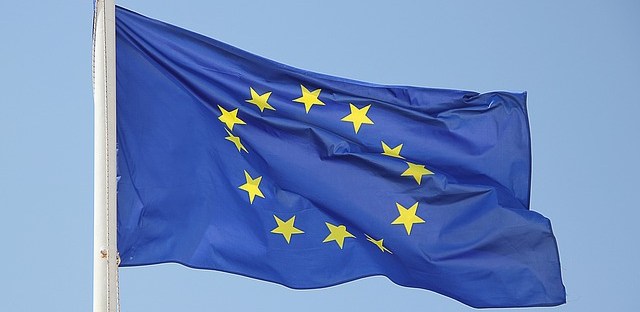
In this blog, we will be looking at how to reference documents from the European Commission using the OSCOLA system. The European Commission is an institution of the European Union (EU) and produces documents such as proposals and action plans, which are all referenced in the same way.
Of course, once the United Kingdom leaves the European Union, its law and policies will no longer apply, but you may still need to reference these documents for some topics. In addition, they will still be relevant if you are looking at law and cases from the past when they were still in force. Also, the UK has not yet left the EU, so it still applies currently!
This blog will first explore what the European Commission is and how it works, then turn to how to reference its documents. Do skip ahead to the section on referencing if you already know about the background of the Commission!
What is the European Commission?
The European Commission is the executive branch of the European Union, which means that it is the section that has the power to put plans into action. It is responsible for proposing and introducing new law and policies for the EU, helping to create the EU’s strategy and managing the budget.
After the law is created, the Commission also ensures that it is being implemented properly. In addition, it also helps to deliver aid and support international development. We will now look at some of these areas more closely.
Looking first at the European Commission’s role in developing strategy, it contributes to this and the political direction of the EU, along with other EU’s institutions. At the beginning of a new term (every 5 years), the president of the Commission will decide on the political direction the Commission will be taking. These will be expanded on in an annual work programme.
The European Commission then develops and implements the policies by proposing laws, ensuring this law is complied with in the Court of Justice, managing the EU budget and allocating funding. It also helps EU countries to implement legislation and represents the EU outside Europe, along with the European External Action Service (the EU’s diplomatic service).
After these duties have been carried out, the European Commission will write a report on the work which has been done. This will be put together with the plan of work created at the start of the year to make the strategic planning and programming cycle. The combined reports from each cycle will then be published by the Commission, which makes one of the document types you might need to reference.
Another of the European Commission’s roles is to evaluate whether their work is effectively meeting the needs of European citizens and businesses. In these evaluations, the criteria considered for each policy are effectiveness, efficiency, relevance, coherence and EU added value. The evaluation results are published in full and are available to buy. Alternatively, the main points of each evaluation can be found online for free at https://eur-lex.europa.eu/homepage.html.
The results of the evaluation will then be used by the European Commission to decide whether that particular policy should be continued without change, altered or removed completely. The Commission follows set guidelines to carry out these evaluations to ensure consistency and common standards for quality.
The European Commission may also do a fitness check on policies, which looks at multiple related actions together, checking for inconsistencies. It will also look at how the different policies interact and what their overall impact will be on the European Union.
How is the European Commission Structured?
The European Commission is made up of many different departments. Each of these departments has a different role in the Commission and will just develop policies for one particular area. The individual departments in charge of policy are known as Directorates-General (DGs). These DGs are responsible for developing, implementing and managing EU policies, laws and funding programmes, as explained above.
The Commissioners are in charge of each DG, with a President above them who is in charge of the overall leadership. There are 28 Commissioners in total, who are collectively called the college and are elected every five years. The Commission President (who is also a Commissioner) leads this team and is elected for five years as well.
In addition to the President, there is also the first Vice-President, the Vice-President and High Representative for Foreign Policy and Security Policy and four Vice-Presidents. The President is suggested by the European Council and the European Parliament will then vote on their candidate. The president-elect will then suggest Vice-Presidents and Commissioners, who need approval from the EU heads of states.
How Do You Reference European Commission Documents?
We will now look at how to correctly cite European Commission documents in your work. The basic format is:
Body that produced the document | ‘Title’ | (Document type, if necessary) | COM number
For example:
Commission, ‘Proposal for a Council Regulation on jurisdiction and the recognition and enforcement of judgments in civil and commercial matters’ COM (99) 348 final.
For this example, it was not necessary to give the document type, but if it is, it should be done like this:
Commission, ‘Action Plan on consumer access to justice and the settlement of disputes in the internal market’ (Communication) COM (96) 13 final.
In any subsequent citations, you can cite the document using just its COM number and any pinpoints.
Wrapping Up
I hope that this helps you to cite documents from the European Commission. Let me know if you have any questions and do stop by for my next OSCOLA blog in two weeks. Thanks for reading!
Want help proofreading your work? Contact Carmine Proofreading for a friendly, professional service from a qualified proofreader.
Email: CarmineProofreading@gmail.com
Twitter: https://twitter.com/CarmineProofed

 Carmine Proofreading