

In my last two blogs, we have looked at some of the advantages and disadvantages of offset printing. This time, we will move on to considering print-on-demand services, first discussing the advantages of this method, then looking at the disadvantages in a later blog. Firstly, let’s review the two types of printing we are comparing.
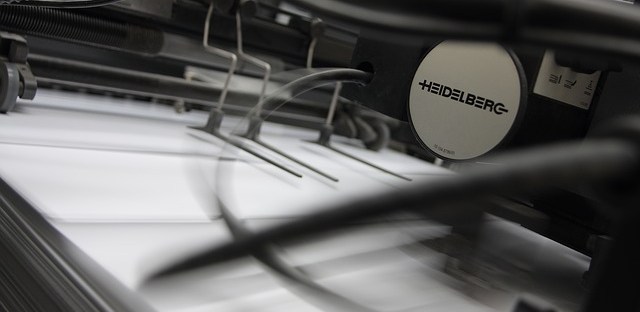
Offset printing is the more traditional method used by publishing houses and requires plates (usually made of metal) to be created individually for each book. The ink is then applied to the plate and transferred to a rubber sheet. The rubber sheet with the ink is then put through the printing press with the paper to create the pages. These will then be bound together to create the book. Naturally, this can be very expensive for small print runs, as the plates will need creating in exactly the same way no matter how many copies you want.
Print-on-demand is a relatively new technology where you simply upload the digital files of your book (usually in PDF format) and the book pages will be printed directly from the files. These will then be bound in much the same way. However, there are not as many options for trim sizes with print-on-demand and there are other limitations, especially with illustrations and decorative touches.
However, print-on-demand services still offer a lot of advantages over offset printing. Possibly the most obvious one is the cost. Print-on-demand does not usually require any upfront payment and you simply pay by the book, as they can be printed individually for exactly the same cost if necessary. If you are not intending to have or expecting to need a high number of books, print-on-demand is a very cost-effective option.
One of the few upfront expenses associated with print-on-demand is the cost of creating print-ready files. Once your manuscript is completed, edited and proofread, it will need to be made ready for print, for example, by making sure it is formatted correctly so that it looks professional once printed. You may well decide to pay someone to do this for you, as it is a very important part of the publishing process.
Despite this small upfront cost for print-on-demand, it is much lower than the equivalent expenses for traditional offset printing. This makes it cheaper overall if you do not expect to need many copies of your book. You will likely have to pay for some sort of formatting anyway, regardless of which printing method you will be using, especially if you will be having an ebook version.
In addition, there is less financial risk if you don’t sell as many copies as required to balance out the upfront costs of offset printing. You will also save money in other ways on print-on-demand books rather than offset printing, some of which we will look at now.
One of the other expenses associated with offset printing is the cost of storing all of the books once they are printed. Books need to be kept in certain conditions to ensure that they stay in good shape, so this will require some thought. They also take up a lot of room! This means that storing them in your own house, while possible, is not ideal. Therefore, you will probably have to pay for storage in a warehouse or similar. If you choose to use print-on-demand, books will only be printed as they are ordered, so there are no storage costs.
Another expense you can avoid with print-on-demand technology is the cost of distributing the books from where you are storing them. Once a book is requested by print-on-demand, it is dispatched directly to the customer and the shipping cost will be taken off the cover price. This will likely be less than you having to dispatch each book individually through the post office or courier. In addition, it means that you don’t have to keep going back and forth to post the books, which may be costing you more in fuel if you are doing it regularly.
Another advantage of the print-on-demand method is that there will be no books (or only a few) left over after sales have slowed or stopped. Any remaining books from offset printing will still need proper storage. Alternatively, you might decide to have the remaining books pulped, which is another cost that you won’t have using print-on-demand.
Print-on-demand is also a very good choice if you are having a book with few to no special design elements such as photographs, charts or illustrations. It is with straightforward, black-and-white books that this printing method shines, as it is nearly impossible for anyone to tell the difference between a print-on-demand book and a traditionally published one.
Indeed, it is in fact becoming harder to know in general, as print-on-demand technology is constantly improving. In the future, it seems likely that print-on-demand methods will get closer in quality to the traditional methods and become a viable option for more people with different types of book to print.
Wrapping Up
This concludes my blog on the advantages of using print-on-demand methods for your book. I hope that you have enjoyed it! Next time, we will be looking at some of the disadvantages of these methods so do come back then!
Want help proofreading your work? Contact Carmine Proofreading for a friendly, professional service from a qualified proofreader.
Email: CarmineProofreading@gmail.com
Twitter: https://twitter.com/CarmineProofed

 Carmine Proofreading
3 thoughts on “Traditional Offset Printing or Print-on-Demand? – Advantages of Print-on-Demand”