

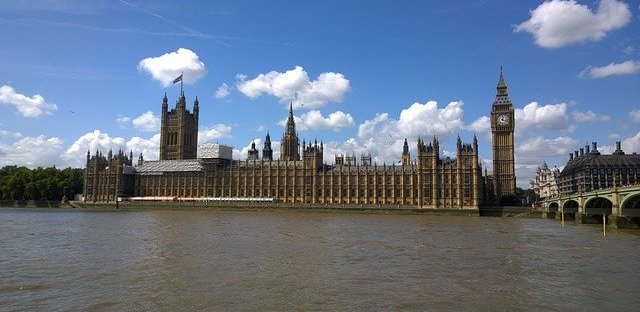
In my last blog post, we looked at how ideas start to become laws, from the initial proposal to a White Paper. In this blog post, we will be looking at the next stage in this journey – from a Bill to an Act. This will include how a Bill is created, the procedure it follows through both the House of Commons and the House of Lords and how it finally becomes an Act of Parliament with the Royal Assent. We will start by considering how Bills are created and introduced to Parliament.
How Do Bills Start?
Not all Bills follow the process outlined in my previous blog post, going from idea to White Paper. Some may just be introduced as a Bill straight away. So, who can introduce a Bill? Well, there are four different types of Bill, which we will quickly look at. The first type is a Public Bill. This is the most common sort and is usually introduced by a Government Minister.
The second type is a Private Members’ Bill. This can be introduced by any MP or Lord who is not a Government Minister. This allows for some different Bills that reflect any special interests that MP or Lord has, including that of any constituents. However, Private Members’ Bills are not allocated as much time for debate as Public Bills, so it is much less likely that they will ever become law.
The next type is a Private Bill, which are introduced by an organisation such as a local authority. These have to be made available to the general public in newspapers and by writing to affected parties.
Finally, there are Hybrid Bills. These are a mix of Public and Private Bills which would affect specific groups and individuals, as well as the public in general. These may be works of national importance that will affect a particular area such as when the Channel Tunnel was built. The Public Bill Offices will decide what counts as a Hybrid Bill and these Bills are given more debate time than Public Bills.
All Bills are discussed in both Houses in turn, using the same process. Most Bills can start in either House, with the exception of Finance Bills, which must start in the House of Commons.
PBL Committee
Once there is a firm proposal for the Bill, it will be sent to the Parliamentary Business and Legislation (PBL) Committee for them to decide whether to include it in the schedule. When doing this, the Committee will look at a number of factors, such as the need for the Bill, how it relates to the Government’s policies and what progress has been made with the Bill so far, such as whether there is a draft in place.
If a Bill is added to the schedule by the PBL Committee, it will be assigned a Bill manager and other officials from the relevant Government departments. They will then send instructions for drafting to the Office of Parliamentary Counsel, who will create a first draft based on these. This first draft will almost certainly change a lot before it is finally presented to Parliament, so it will go back and forth between the Bill manager and the Counsel quite a few times!
The final draft will then go back to the PBL Committee, which will look at this together with some other documents to make the decision on if and when it will be introduced. These other documents may be the supplementary materials that will eventually be published with the Act, or a Parliamentary Handling Strategy which will only be seen by the Committee.
Readings
Now that the Bill is ready to be presented to Parliament, it is time for the readings. The first reading is purely informative and will not invite any discussion or debate.
At the second reading, a Government Minister will introduce the Bill and state the case for it. Any objections or suggestions can then be made, which will be responded to by the Government, closing the debate. No amendments can be made at this stage. After the debate, there will be a vote to decide whether the Bill will continue.
The Bill then moves on to the Committee stage. If this is in the House of Commons, it will be heard by a Public Bill Committee of MPs from across all parties, or a Committee of the Whole House, where it is heard in the chamber. In the House of Lords, it is always heard by all the Peers, either in the chamber or the Palace of Westminster. Whichever Committee is used, it will decide whether each clause should stay in and what amendments should be made.
After this, it is the Report stage, which always takes place in the chamber. Only amendments are discussed here, so if there are none this is purely a formality. This stage is sometimes also called consideration in the House of Commons.
Finally, the Bill will move on to the third reading. This is a general discussion about the Bill, but no amendments are possible at this stage.
Remember that both Houses of Parliament must have been through all of these stages before the Bill can proceed.
Royal Assent
Once both Houses have completed the Readings, the Bill will need to be granted Royal Assent before it can become law. This used to actually involve the monarch deciding whether they approved of a new law; however, these days this is merely a formality. The Queen could not realistically refuse the Royal Assent – this would probably mean an end to the monarch’s involvement.
Wrapping Up
I hope that this helps you with your work and you are now more confident about how laws are created. In my next blog post, we will be asking what secondary legislation is, so come back in two weeks for that!
Want help proofreading your work? Contact Carmine Proofreading for a friendly, professional service from a qualified proofreader.
Email: CarmineProofreading@gmail.com
Twitter: https://twitter.com/CarmineProofed

 Carmine Proofreading
2 thoughts on “How Are Laws Made? – From Bills to Acts”